Ad Creative AI for SaaS: What Actually Improves Conversions
Ad creative ai works when it ties angles to Meta feedback and SaaS conversion signals. Learn the right workflow, then get started with Infinite.
On this page
- Why most AI ad tools stop too early
- What ad creative ai is actually useful for
- The workflow that beats prompt-only creative generation
- Where Meta feedback should shape the next creative round
- How to evaluate tools in this category without getting fooled
- Why this matters more for solo SaaS founders than agencies
- Frequently Asked Questions
Ad creative AI improves SaaS conversions only when it sits inside a feedback loop. The useful version is a workflow that turns real buyer objections into testable angles and judges those angles against qualified signups, activation, and paid conversion rather than against whether the ad looks polished.
Why most AI ad tools stop too early
Most founders make the same mistake: they generate a batch of ads, pick the cleanest-looking one, trust a platform score, and treat that as strategy. That is asset production rather than strategy.
That matters because the leading tools in this category mostly sell speed, volume, and surface polish. Meta itself documents creative automation features that can generate multiple text variations and alternative media treatments, depending on campaign setup and eligibility, but those features describe how output gets produced, not whether a SaaS offer converts better downstream (Meta Advantage+ creative documentation). The broader market has followed the same pattern with prompts, templates, inspiration feeds, and predictive scores.
The commercial decision for a solo founder is sharper than “can AI make ads?” The real question is whether the tool can connect angle selection and iteration to pipeline-quality signals. That distinction shows up in adjacent work too: Semrush reports that 64% of SEOs use a human-led, AI-assisted workflow, while only 19% say AI improves content quality. Different channel, same lesson. Speed helps, but only inside a system that can tell good output from expensive noise.
What ad creative ai is actually useful for
Used well, ad creative AI is a production and testing accelerator. Its best jobs are angle exploration, rapid variant generation, channel formatting, first-draft copy, and creative testing support. It is far less useful when the offer is vague or the buyer problem is still fuzzy.
That boundary shows up clearly in practitioner reviews. Entrepreneur Nut argues in AdCreative AI Review [2026] How To Create Ads FAST With AI that the category becomes more useful when generation is paired with account analysis, inspiration libraries, and performance monitoring. Cybernews makes the complementary point in AdCreative AI review 2026 | Are AI-GENERATED ADS the FUTURE?: the underlying ad idea still decides whether the output lands.
For a solo SaaS founder with a clear audience, known pains, and some real customer language, that is enough to create value. A solid angle can become several credible tests quickly. For a founder still guessing at positioning, the same tool often multiplies confusion into prettier confusion.
A practical evaluation lens is simpler than most vendor pages make it sound:
- Speed to launch
- Coverage across distinct angles
- Number of testable variants per angle
- Ease of feeding results into the next round
If those four improve, the tool is helping. If only output volume improves, it is stopping too early.
The workflow that beats prompt-only creative generation
Prompt-only generation fails because it starts with assets instead of evidence. The better system starts manually, before any tool is mentioned.
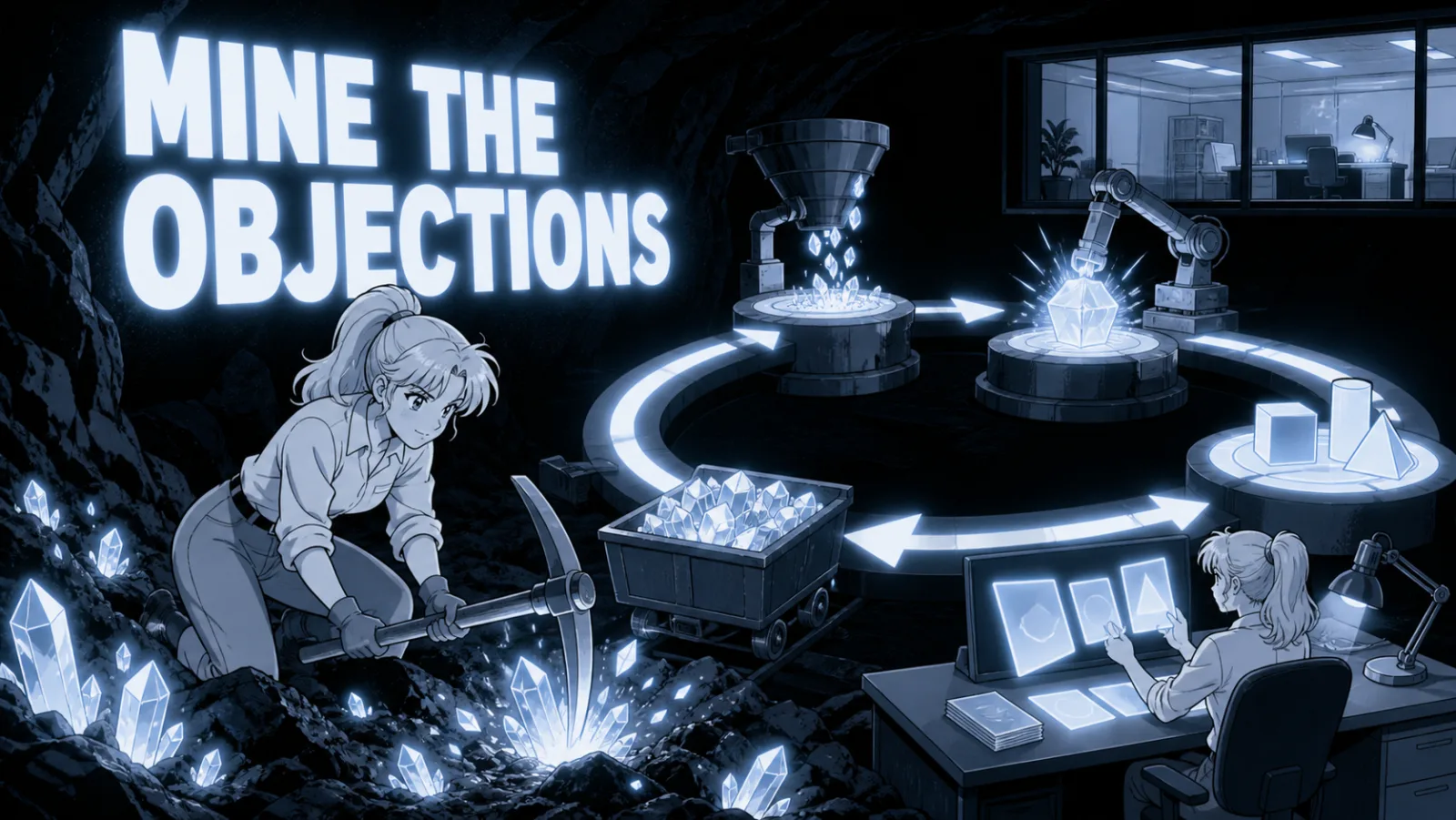
- Pull objections, use cases, desired outcomes, and lost-deal reasons from demos, support notes, founder inboxes, and sales calls.
- Group that language into distinct angles such as speed, cost control, replacement of manual work, proof, or category contrast.
- Write one message per angle across four parts: pain, outcome, proof, and audience.
- Generate multiple variants inside each angle instead of spraying unrelated one-off prompts.
- Launch controlled tests in Meta.
- Read post-click and downstream conversion data.
- Refresh only the angles that earn another round.
For SaaS, angle structure matters more than raw asset count because message fit usually beats visual novelty. One sharp message aimed at a real objection can outperform a large batch of generic creative.
A concrete contrast makes the difference obvious:
| Approach | What it looks like | What usually happens | Better move |
|---|---|---|---|
| Prompt-only | “Make a modern AI ad for B2B SaaS” | Generic output, weak buyer intent | Start from a named objection |
| Score-first | Pick the highest-rated draft before launch | False confidence | Treat scores as a prior, not a verdict |
| Angle-led | One angle, several variants across copy and creative | Cleaner test readout | Compare variants inside one declared message |
| Feedback-led | Only refresh what attracts qualified signups | Better learning per cycle | Keep winners and losers logged |
When should a founder stop generating more ads?
If the account cannot see meaningful post-click events beyond CTR and CPC, more creative volume is the wrong move. Instrumentation comes first, because new ads cannot solve missing feedback.
Where Meta feedback should shape the next creative round
Creative should be judged in layers. First comes attention, usually CTR. Second comes efficiency, often CPC. Third comes conversion quality: CVR, qualified signup rate, activation, and trial-to-paid movement where the account can see it. SaaS founders need all three layers because cheap clicks from the wrong audience can look promising until the funnel stalls.
Meta’s A/B testing documentation says advertisers can compare versions by changing variables such as image, text, audience, or placement (Meta A/B testing documentation). That is the test frame, not the business verdict. The verdict comes from account performance and downstream events.
What should count as a winning ad?
Not the cleverest one. Not the one with the prettiest mockup. Not the one with the highest pre-launch score. The winner is the ad that attracts the right buyer intent at an acquisition cost the business can support.
That caution matters because built-in scores can still be useful for draft sorting. They just should not outrank founder judgment or live account data. The strongest large-scale evidence in the packet is also conditional: a 2025 working paper covering more than 369 million impressions and 2.5 million clicks reports that AI-generated images beat human-generated images on CTR only when they did not look like AI. Separate 2025 advertising research summaries also note that AI-led ads can hurt credibility or disappoint consumers when the quality bar is missed. For SaaS, that means the operating model matters more than the novelty.
Founders who want the broader control logic behind this should also read Facebook ad automation without killing performance.
How to evaluate tools in this category without getting fooled
The first useful split is between generators and operators. A generator helps make assets faster. An operator helps turn research, production, testing, and iteration into one repeatable system.
That makes tool evaluation more practical when the field includes both ad-focused products and broader workflow platforms. AdCreative.ai and Creatify are closer to creative generation. Jasper is stronger as a drafting layer for teams that already know their message. Tofu, MindStudio, and Relevance AI are broader systems, which means the question is less “can it make ads?” and more “can it support the operating model this team actually needs?”
Which kind of tool is actually being bought?
Use this checklist before paying for anything:
| Option | Best fit | What to verify | Tradeoff accepted |
|---|---|---|---|
| AdCreative.ai | Founder who mainly needs fast asset output | Feedback loop depth, scoring usefulness, ad-library visibility | Fast production, lighter operating depth |
| Creatify | Team focused on creative generation formats | Channel support, review flow, brand control | Better output speed, less message diagnosis |
| Jasper | Team with strong positioning that needs copy help | How ad drafting fits the testing workflow | Strong drafting, weaker iteration logic |
| Tofu | Buyer evaluating broader demand-gen systems | Where ad-specific execution begins and ends | More system depth, less ad-maker simplicity |
| MindStudio | Founder comparing agent or workflow builders | Pricing model, usage terms, setup burden | Flexible logic, more operator judgment required |
| Relevance AI | Team exploring wider GTM automation | Whether ad iteration is native or assembled | Broader automation, less category focus |
Pricing is the easiest place to get misled because plan structure changes, usage terms move, and monthly screenshots age quickly. The better decision rule is this: choose a generator if the bottleneck is asset creation. Choose an agent-style system if the bottleneck is turning buyer research into repeated testing decisions.
Why this matters more for solo SaaS founders than agencies
Agencies can survive some fragmentation because they already have specialists, reporting layers, and process. A solo founder usually cannot. Another dashboard full of suggestions is not enough. The real need is a single operating layer that can move from angle discovery to asset production to performance readout without turning growth into a second job.
That is where an agent-first system becomes a practical option. For founders trying to turn positioning into paid acquisition, Infinite can connect buyer-angle mining, on-brand ad generation, and Meta account feedback in one workflow, then execute campaign, ad set, and ad changes inside budget guardrails. The fit is strongest for founders who already own their growth and have enough conversion tracking to tell signal from noise. Teams that only want a design-first ad maker are better served by a simpler generator.
The practical takeaway is to adopt the operating model before chasing more creative volume. For founders who want that loop handled inside a broader go-to-market system, Hire your AI marketing agent - Get Infinite is the cleanest next step.
Frequently Asked Questions
Is ad creative AI any good?
Yes, when it speeds up angle testing without replacing strategic judgment. It is weak when founders use it to compensate for unclear positioning or judge success by polish alone.
How much is ad creative AI per month?
Cost varies widely by product, plan design, and usage model, so monthly spend is best checked on the vendor’s live pricing page before purchase. For broader workflow platforms, the important question is what extra usage, limits, or execution rules affect the real bill, well beyond the listed plan.
What is AdCreative AI used for?
AdCreative.ai is commonly used for generating ad concepts, drafting creative variants, reviewing inspiration, and sorting early ideas before launch. The category becomes more useful when those outputs can also be compared against live account performance instead of staying at the mockup stage.
How to cancel ad creative AI subscription?
Cancellation depends on the vendor’s billing terms and account settings. The safest move is to review the tool’s current billing page and support documentation before subscribing, especially if the founder expects to run only a short test cycle.
What should SaaS founders measure after launching AI-generated ads?
They should start with CTR and CPC, then move quickly to CVR, qualified signup rate, activation, and trial-to-paid movement where available. If only attention metrics are visible, the founder can judge whether ads attract clicks, but not whether they attract buyers worth paying for.
The AI CMO for founders
Infinite is the AI marketing agent that runs your SEO, content, ads, and analytics end to end.